New cabinets can run you $15,000 to $30,000 or more once you add installation. That’s why so many San Diego homeowners are asking a simpler question first: can I just get my existing cabinets painted instead? Most of the time, yes, and it costs a fraction of a full replacement while giving you nearly the same visual upgrade.
This guide covers real cabinet painting pricing in San Diego for 2026, walks through when refinishing actually makes sense versus when you should just replace, and shows what changes the price the most.
Quick Answer
Painting kitchen cabinets in San Diego typically costs $3,800 to $9,500, depending on kitchen size, cabinet material, and finish type. That’s usually 60-80% less than a full cabinet replacement for a comparable kitchen size.
| Kitchen Size | Doors/Drawers | Paint Cost | Replacement Cost |
|---|---|---|---|
| Small | 10–15 | $3,800 – $5,500 | $12,000 – $18,000 |
| Medium | 16–25 | $5,500 – $7,500 | $18,000 – $25,000 |
| Large | 26+ | $7,500 – $9,500+ | $25,000 – $35,000+ |
What Actually Drives Cabinet Painting Cost
Number of doors and drawers. This matters more than square footage of the kitchen. A galley kitchen with 24 small doors costs more to paint than an open kitchen with 14 large ones, since pricing is based on individual pieces sprayed and finished, not floor space.
Cabinet material. Solid wood, MDF, thermofoil, and laminate all take paint differently.
Solid wood (oak, maple, cherry) holds paint well but oak needs grain filling for a smooth finish, which adds labor. We cover this in detail in our guide on painting oak cabinets.
MDF and painted wood composites are usually the easiest and cheapest to refinish since they’re already smooth.
Thermofoil and laminate are trickier. They need specialty primer and sometimes aren’t good candidates for painting at all, since the vinyl coating can peel.
Sprayed vs brushed finish. A professional spray finish (cabinets removed, sprayed off-site or in a controlled space, then rehung) gives you that factory-smooth look and typically costs more than an in-place brush and roll job, but it holds up better and looks dramatically better up close. We go deeper on this comparison in sprayed vs brushed cabinet finishes.
Hardware and add-ons. New hinges, soft-close upgrades, and new pulls or knobs are usually priced separately and can add $300 to $1,000+ depending on how many pieces you’re updating.
Refinish vs Reface vs Replace: What’s the Difference
These three terms get used interchangeably by homeowners but they’re very different projects with very different price tags.
Refinish (painting): Your existing cabinet boxes and doors stay exactly where they are. They’re cleaned, sanded, primed, and sprayed with new color. Boxes, hinges, and layout don’t change. This is the cheapest option and what most of this guide covers.
Reface: Cabinet boxes stay, but doors and drawer fronts are replaced with new ones, and any exposed box surfaces get a matching veneer. This costs more than painting but less than full replacement, usually $8,000 to $15,000 for a mid-size kitchen. It makes sense if your doors are damaged or warped but the boxes are solid.
Replace: Everything comes out, new boxes go in. This is the only option if you want to change your kitchen layout, if your existing boxes have water damage or structural issues, or if you just want an entirely different cabinet style.
When Painting Makes Sense (And When It Doesn’t)
Paint your cabinets if:
- The boxes and doors are structurally solid, no water damage, no warping
- You like your current layout and just want a color update
- You’re working with a tighter budget but still want a real visual change
- Your cabinets are solid wood, MDF, or another paintable material
- Skip painting and consider replacement if:
- You want to change your kitchen layout or add storage
- Cabinet boxes have water damage, mold, or structural rot
- Your cabinets are thermofoil or laminate in poor condition, where paint won’t adhere well long-term
- You’re already doing a full kitchen remodel with new counters and appliances
Real Cabinet Project Breakdown
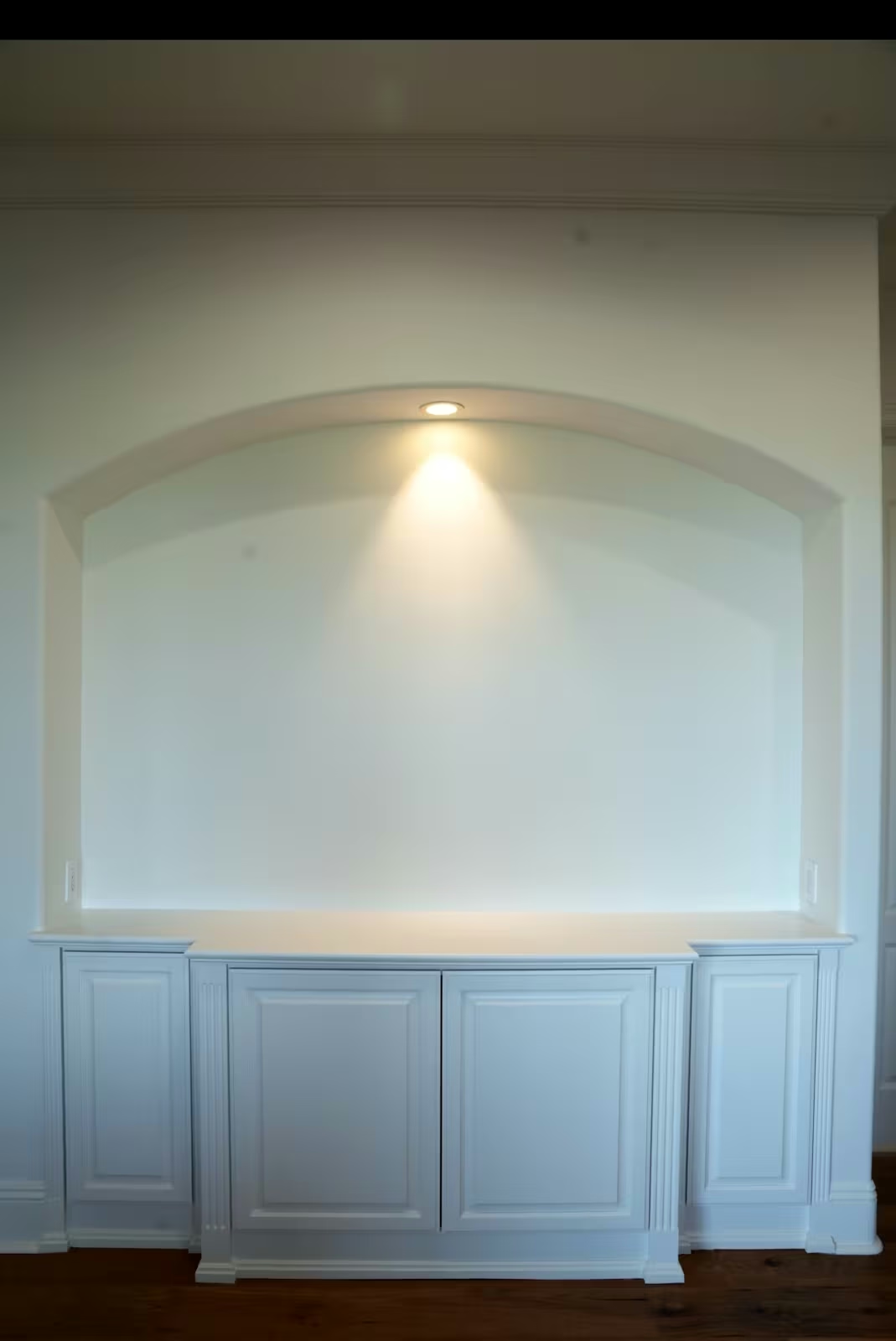
Example structure to fill in:
Kitchen, hallways, bathroom: 7 Cabinets
Original color/material: Brown Wood
New color/finish: White
Process: removed, sprayed off-site, reinstalled with new hardware
Timeline: 4 days
Final cost: $5,400
The Professional Cabinet Painting Process
A rushed cabinet paint job is one of the most obvious repaints there is, drips, brush marks, and paint bleeding into hinges show up fast in kitchen lighting. Here’s what a proper process actually looks like:
Removal. Doors, drawers, and hardware come off and get labeled so everything goes back exactly where it started.
Cleaning and degreasing. Kitchen cabinets accumulate cooking grease that regular cleaners don’t fully remove. Skipping this step is the number one reason cabinet paint fails early.
Sanding and repair. Surfaces get scuffed for adhesion, and any dents, dings, or grain (on oak especially) get filled and smoothed.
Priming. A bonding primer made for cabinetry, not wall primer, goes on first.
Spraying. Multiple thin coats go on in a controlled, dust-free environment for that smooth factory look.
Curing. Cabinet paint needs real cure time, often 3-7 days, before doors go back on and get used hard. Rehanging too early is a common DIY mistake that causes chipping.
Reinstall. Doors and drawers go back on, often with new soft-close hinges.
Choosing a Color and Finish
Color trends shift, but a few choices are holding up consistently in San Diego kitchens right now: warm whites and off-whites, soft greige tones, and increasingly, two-tone kitchens with a darker island paired against lighter perimeter cabinets. Sheen matters as much as color. Satin and semi-gloss are the standard for cabinets since they wipe clean easily and hold up to grease and moisture better than flat or eggshell, which show fingerprints and scuff too easily in a working kitchen. We cover current color trends in more depth in our 2026 kitchen cabinet color guide.
DIY Cabinet Painting vs Hiring a Pro
It’s tempting to treat cabinet painting as a weekend DIY project, and plenty of people try it. The honest answer is that it’s one of the least forgiving painting projects to DIY well. A few reasons:
Spray equipment matters. Brush and roll finishes on cabinet doors almost always show texture and brush marks under kitchen lighting, no matter how careful you are. Getting that smooth factory look really does require spray equipment and a controlled space.
Cure time gets skipped. DIYers often rehang doors and start using cabinets within a day or two, before the paint has actually hardened. This leads to chipping and sticking at hinges within weeks.
Degreasing gets underestimated. Kitchen grease is invisible once wiped down but still sits in the wood grain. Paint applied over it peels within months.
If your budget is tight, a full DIY refinish can save money upfront, but a rushed result often needs a professional redo within a year or two, which ends up costing more than hiring it out correctly the first time.
How Long Does Cabinet Painting Take?
Most full kitchens take 5 to 10 working days from start to finish, factoring in cure time between coats. This is one of the reasons professional spray finishing (where doors are removed and sprayed in a dedicated space) often finishes faster and cleaner than in-place painting, even though the kitchen is unusable for a few days during removal.
Frequently Asked Questions
How much does it cost to paint kitchen cabinets in San Diego? Most kitchens run $3,800 to $9,500 depending on size, cabinet count, and finish type. Small kitchens with 10-15 doors tend to fall on the lower end.
Is painting cabinets cheaper than replacing them? Yes, significantly. Painting typically costs 60-80% less than full replacement for a comparable kitchen.
How long do painted cabinets last? A properly prepped and sprayed cabinet finish with quality paint can last 10-15 years with normal use, especially with soft-close hardware reducing slam impact.
Can you paint oak cabinets without the grain showing? Yes, with grain filling before priming. Skipping this step is why a lot of oak cabinet paint jobs still look textured after painting. More detail in our oak cabinet painting guide.
Do I need to replace hardware when painting cabinets? No, but it’s a good time to do it since the doors are already off. New hinges and pulls can make an even bigger visual difference for relatively low cost.
Can laminate or thermofoil cabinets be painted? Sometimes, but it depends on condition. If the laminate is peeling or bubbling already, paint won’t fix the underlying adhesion problem and replacement or refacing is usually the better call.
What sheen is best for kitchen cabinets? Satin or semi-gloss. Both clean easily and resist the grease, moisture, and fingerprints that flat or eggshell finishes show quickly in a kitchen.
Will painted cabinets look as good as new cabinets? Visually, a professionally sprayed finish is very close to a factory look, especially in satin or semi-gloss. The main difference is you keep your existing box structure and layout rather than getting new storage configurations.
Ready for a Real Number?
Kitchen cabinet pricing depends a lot on your specific setup. Get a free cabinet painting quote and we’ll walk your kitchen, count doors and drawers, and give you an honest, itemized number.